A High IGF-1 Result: Preparing Questions for Medical Review
A high IGF-1 flag is a reason to seek a clear medical explanation. If a scan is mentioned in the same conversation, it is easy to hear the two pieces of information as one conclusion. Writing down the blood finding, the question being investigated and any proposed imaging separately helps you follow the reasoning.
Start with the finding that has actually been reported
Keep the result, unit, printed interval and relevant reference category together. A laboratory flag describes the result’s position against that comparison; the clinician then considers why the test was ordered and what else is known. General laboratory guidance from MedlinePlus explains why a value outside an interval needs context.
Tell the team about relevant circumstances and the medicines or supplements you use. For example, Mayo’s clinical information identifies pregnancy as a context in which IGF-1 concentrations can increase. That is a reason to supply the history, not an explanation to apply to every high result. [1] [3]
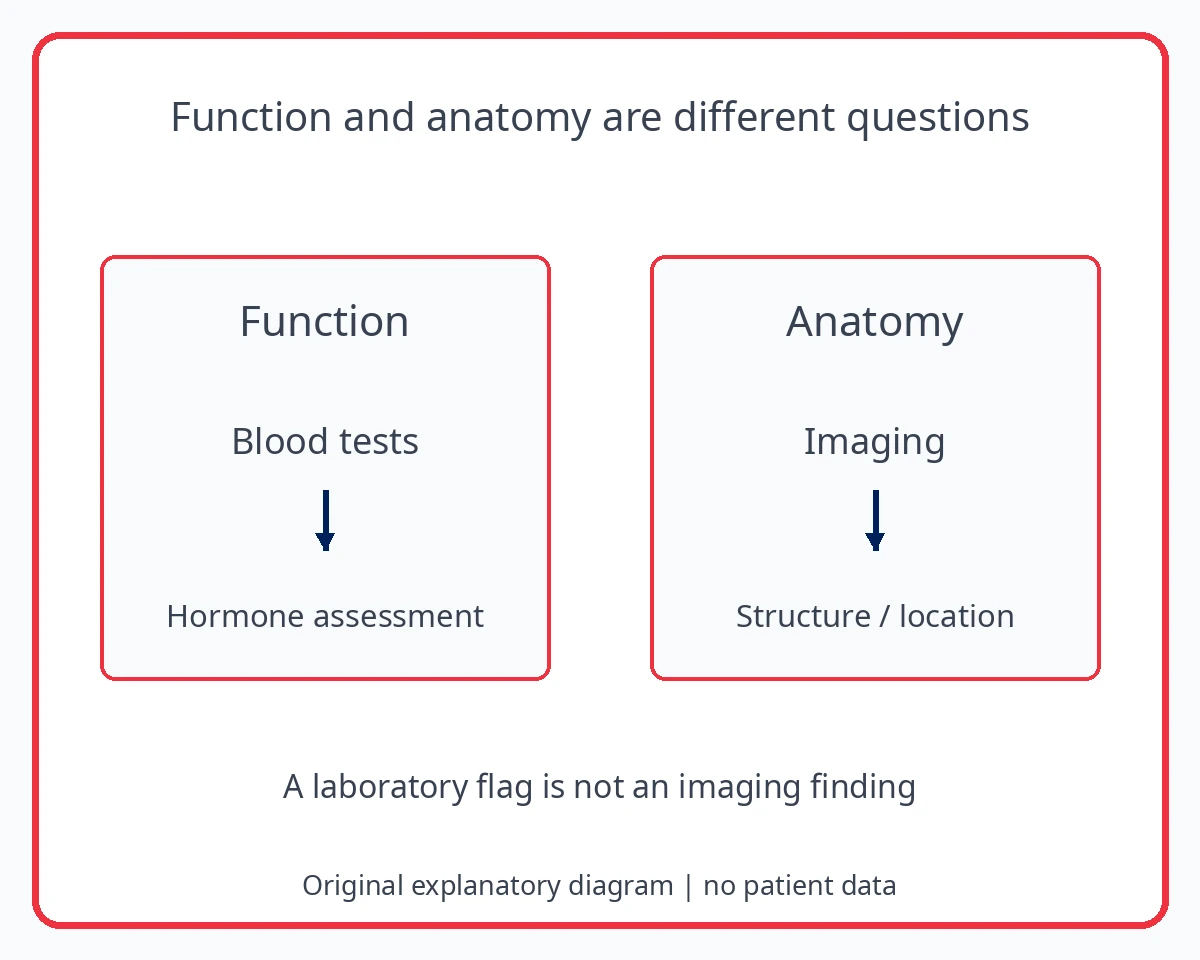
Function and anatomy answer different questions
NIDDK’s explanation of acromegaly distinguishes hormone blood tests from imaging used to examine anatomy. A finding of increased IGF-1, an assessment of GH excess and an imaging finding are different kinds of evidence. One should not be silently substituted for another. This distinction is useful when preparing questions: “What does the blood result show?” and “What would an imaging study clarify?” ask about different stages of reasoning. [2]
Separate the evidence from the plan
A fictional appointment note shows how to keep different kinds of information from merging into a diagnosis.
| Entry | What the note actually says | What it does not establish |
|---|---|---|
| Blood report | IGF-1 flagged high; full report saved | No lesion location or size comes from this flag |
| Clinical discussion | Team is assessing the meaning of the result in the history | The patient’s note is not a diagnosis |
| Imaging | Discussed as a possible further step; not yet performed | No imaging finding exists in this example |
| Next contact | Ask the reviewing team to confirm the agreed assessment and result route | Do not assume the discussion itself booked a test |
A message that preserves the uncertainty
“The blood result needs review. The team discussed what further assessment might clarify it; no scan has been performed yet.” That message accurately describes the fictional note. “A tumour has been found” would add an event and a conclusion that are absent.
When a result becomes available, record the team’s explanation alongside the original document. This lets the account become more specific as evidence arrives, without turning a possibility into a fact ahead of time.
If the team proposes a repeat, clarify its purpose with Why an IGF-1 Result May Be Rechecked
Ask what the next step is intended to establish
A proposed repeat blood test, a review of existing results and an imaging discussion are separate events. Record each with its status: discussed, requested, performed or result available. This avoids a common misunderstanding in family messages, where “scan discussed” becomes “scan found something”.
At the end of the review, ask which question is still open and who will explain the next result. If you are unsure why a step has been proposed, ask for the reasoning in ordinary language. Understanding the purpose is more useful than trying to choose an assessment from a list online.
To record the agreed assessment and follow-up contact, see An Adult Endocrine Follow-Up Checklist for Shared Decisions
The next assessment depends on the clinical review
This article does not diagnose acromegaly or recommend which test you need. New or severe symptoms require clinical attention rather than interpretation through this worksheet.
Sources and reading context
- MedlinePlus understanding laboratory results — Reference intervals, units and contextual interpretation; no personal diagnosis
- NIDDK acromegaly — Blood tests assess function and imaging examines anatomy; not a self-diagnosis pathway
- Mayo Clinic Laboratories IGF-1 serum — Physiology and historical interpretation example only. Page currently says Not Orderable due to assay issues. Do not cite as available service or copy preparation instructions or universal ranges.