Comparing IGF-1 Results From Different Laboratories
A higher number from a new laboratory can look like a clear rise on a spreadsheet. Before giving it a clinical meaning, check what changed in the measurement. The name of the laboratory, its assay and its reference information belong beside the number, especially at a transition between services.
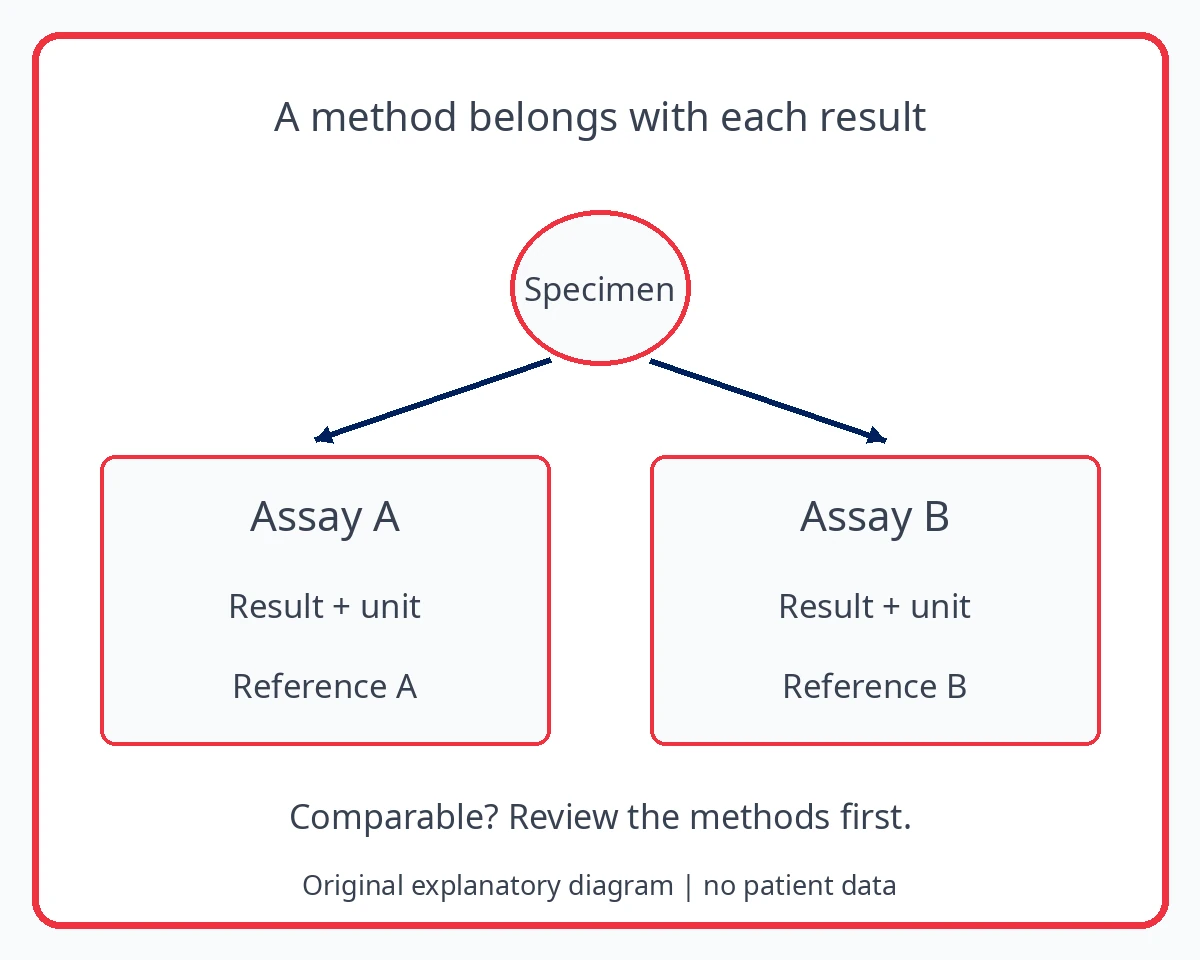
Why the method belongs in the comparison
A French multicentre study by Chanson and colleagues measured IGF-I with six immunoassays in 911 healthy adults. Using the same reference population still produced differences between assay-specific intervals, particularly their upper limits. This is a concrete reason to preserve the method alongside the result; it is not simply a warning that different people have different hormone values.
The study was published in 2016 and examined the assays available for that work. It does not rank every current laboratory or give a correction factor for your reports. Its practical contribution here is the comparison question: are these measurements and their reference systems sufficiently comparable for the conclusion being proposed? [1]
Matching units does not make methods identical
MedlinePlus advises using the range on the actual report and cautions against directly comparing results from different laboratories. Matching units is necessary for sensible reading, but it does not erase method or reference differences. Likewise, an SDS still depends on the reference system that produced it. Avoid subtracting two values and calling the difference a biological change before your team has reviewed comparability. [2] [1]
A comparison with a visible method question
Fictional values and laboratory labels show the filing method. They are not clinical reference data.
| Field | Earlier report | Later report |
|---|---|---|
| Specimen date | 4 June 2026 | 6 October 2026 |
| Laboratory / method | Laboratory A; method code A1 | Laboratory B; method not shown |
| IGF-1 result | 150 ng/mL | 180 ng/mL |
| Reference information | Retained in original report A | Retained separately in original report B |
| Reading status | Earlier measurement | New laboratory: comparability review needed |
Keep the change visible without deciding its cause
180 − 150 = 30 ng/mL in the fictional records. The records alone do not divide that difference into biological change, method difference or other influences. Keep the new point, its original report and a clear laboratory-change marker.
Ask the team whether the two results can be compared as presented and what the difference means for the reason you are being assessed. The marker prevents premature interpretation; it does not dismiss the newer result.
To make the laboratory transition visible in a longer record, use Reading a Hormone Test Trend Without Diagnosing Yourself
Mark the transition before drawing the line
In this invented pair, the unit stays the same but the laboratory changes and the newer method is not identified. Retain each report’s interval with its own entry; do not paste the older interval into the newer row. A method field marked “unknown” is useful because it tells the clinical team exactly what needs checking.
You can report the arithmetic difference while keeping its meaning open: “The recorded value is 30 ng/mL higher, but these came from different laboratories.” That is more precise than saying the condition worsened by 20 percent, which adds a biological and clinical conclusion to an unverified comparison.
To retain specimen dates and report versions, see Organizing Laboratory Results for a Pituitary Appointment
The comparison does not determine the cause
This comparison method cannot determine the cause of a difference or replace clinical review. Do not average results across laboratories to create a personal normal value.
Sources and reading context
- Chanson and colleagues 2016 IGF-I reference values for six immunoassays — Primary assay-comparison evidence; not a conversion rule
- MedlinePlus understanding laboratory results — Reference intervals, units and contextual interpretation; no personal diagnosis